Garden Party

At the suggestion of several avid gardeners, we held a garden gathering to celebrate summer on a lovely Sunday, July 11th at 6 pm.

A number of families gathered for cocktails at the garden.  New and old families were welcomed, and the garden budget was reviewed.


Co-op Class: Seed Starting for Beginners

The Co-op is offering the following class:

In this class, we’ll discuss the principles and practices of starting your own seeds at home. Norman will include information on seeding dates, as well as tips specific to different plants species.

The Details

When: Monday, March 15, 2010
Time: 6 p.m.—8 p.m.
Where: Hanover Co-op Food Store
Price: $20 Member, $25 Non-Member

About the Instructor

Norman Porter, who grew up on a dairy farm in Lebanon, NH, was introduced to gardening at a young age and has a lifetime of experience gardening in the Upper Valley area. Upon graduating from the University of New Hampshire with a degree in Plant Science, Norman returned to the Porter Farm to establish his own business, Porter’s Greenhouse. For the next twenty years, Norman and his wife, Cheryl, provided the Upper Valley with spring bedding plants, farm-grown dried flowers, and a lot of free advice.

Registration

To register for any of our classes or to receive more information, call 603-643-2667 and our Information Desk staff will be happy to help you. See you in class!

www.coopfoodstore.coop


Solstice Seed Catalog

Click here to view Sylvia Davatz’ local seed catalog in PDF format.  Sylvia lives and farms in Hartland, VT and collects her own seeds.

This catalog was provided by Pat McGovern of Upper Valley Localvores.


Least Wanted Plants of the Upper Valley

The Hanover Garden Club has printed this brochure about invasive plants in the Upper Valley.  They also have an informative web site with other resources.


The People’s Garden

“Growing Healthy Food, People and Communities

The USDA has created a “People’s Garden” at their headquarters on the National Mall in Washington.  This is a sustainable landscape with an organic garden, a kitchen garden, rain gardens, a bat house, a “Three Sisters” garden, and more. They have a spot for a farmer’s market, too.  Good job, USDA!

More info

Brochure on the Garden (PDF, 1.3 Mb)


Webworm

For those who may have noticed the webbed nests in the trees on the edge of Girl Brook, they are not tent caterpillars. They are in fact “fall webworm”.  Because they develop in the fall after the foliage has already developed, they don’t really do much damage to the tree.  So no cause for concern….


Localvore Garden Visit

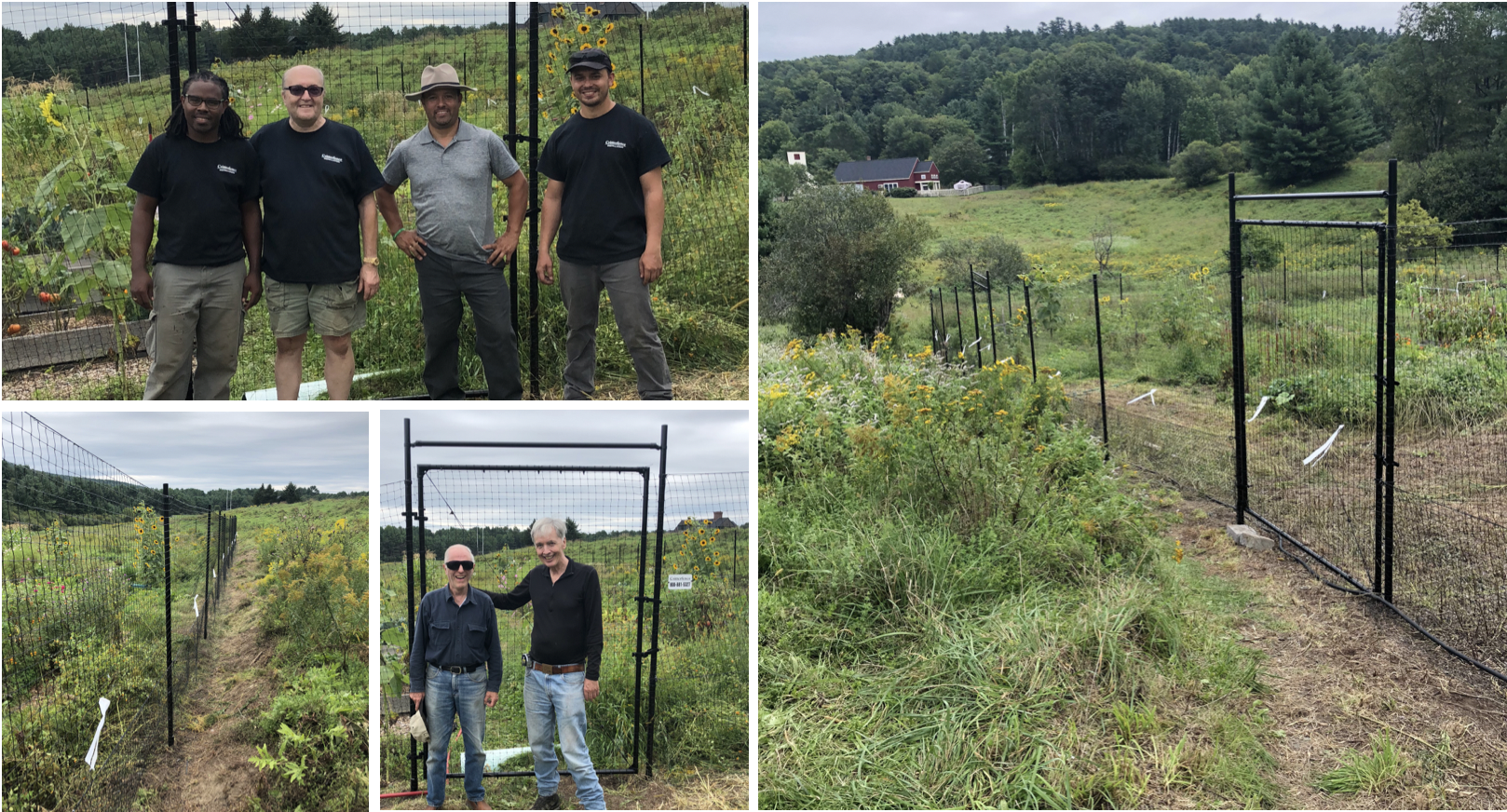
The Upper Valley Localvore group visited our gardens on Sunday, August 30th. They sent along these pictures from their visit.


Farmers Almanac Predicts Cold Winter Ahead

This is from the Associated Press wire report:

Households worried about the high cost of keeping warm this winter will draw little comfort from the Farmers’ Almanac, which predicts below-average temperatures for most of the U.S.

“Numb’s the word,” says the 192-year-old publication, which claims an accuracy rate of 80 to 85 percent for its forecasts that are prepared two years in advance.

The almanac’s 2009 edition, which goes on sale Tuesday, says at least two-thirds of the country can expect colder than average temperatures, with only the Far West and Southeast in line for near-normal readings.

“This is going to be catastrophic for millions of people,” said almanac editor Peter Geiger, noting that the frigid forecast combined with high prices for heating fuel is sure to compound problems households will face in keeping warm.

The almanac predicts above-normal snowfall for the Great Lakes and Midwest, especially during January and February, and above-normal precipitation for the Southwest in December and for the Southeast in January and February. The Northeast and Mid-Atlantic regions should be getting an unusually wet or snowy February, the almanac said.

The forecasts, which are spelled out in three- and four-day periods for each region, are prepared by the almanac’s reclusive prognosticator Caleb Weatherbee, who uses a secret formula based on sunspots, the position of the planets and the tidal action of the moon.

Weatherbee’s outlook is borne out by e-mail comments that the almanac has received in recent days from readers who have spotted signs of nature that point to a rough winter, Geiger said. The signs range from an abundance of acorns already on the ground to the frequency of fog in August.

The almanac’s winter forecast is at odds with that of the National Weather Service, whose trends-based outlook calls for warmer than normal temperatures over much of the country, including Alaska, said Ed O’Lenic, chief of the operations branch at NOAA’s Climate Prediction Center.

While he wouldn’t comment specifically on the almanac’s ability to forecast the weather two years from now, O’Lenic said it’s generally impossible to come up with accurate forecasts more than a week in advance.

“Of course it’s possible to prepare a forecast with any lead time you like. Whether or nor that forecast has any accuracy or usable skill is another question,” he said.